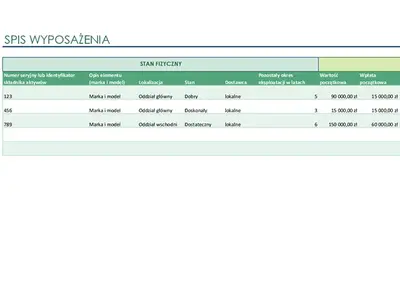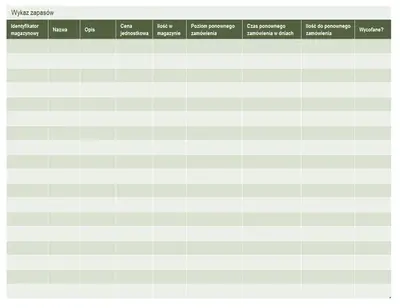
Lista spisów starych
Użyj tego szablonu

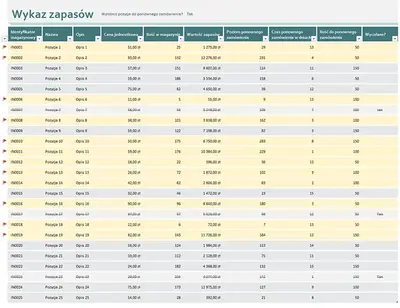
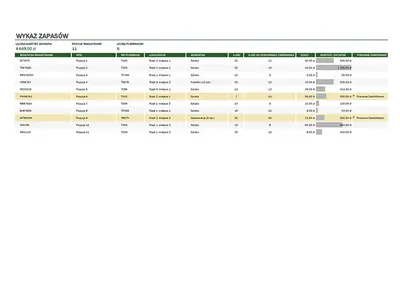
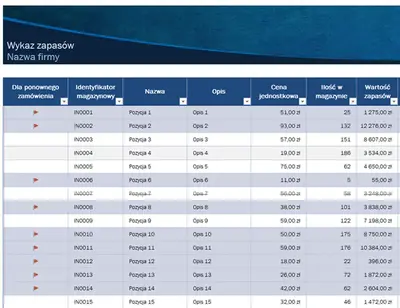
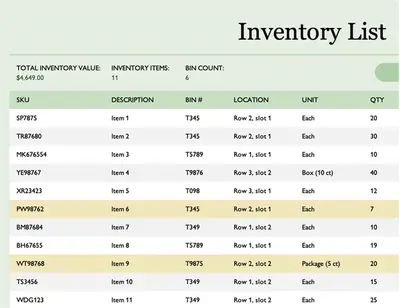
Twórz arkusze kalkulacyjne do śledzenia stanów magazynowych, aby wspierać zrównoważone zarządzanie zapasami za pomocą programu Microsoft Excel.

Zacznij od bezpłatnych arkuszy kalkulacyjnych programu Excel do zarządzania zapasami, które pozwolą Ci zamawiać, zarządzać i analizować stan zapasów. Zoptymalizuj koszty utrzymania zapasów i odkryj wzorce wykorzystania dzięki historii zapasów, co pozwoli Ci reagować na wahania popytu lub problemy w łańcuchu dostaw.
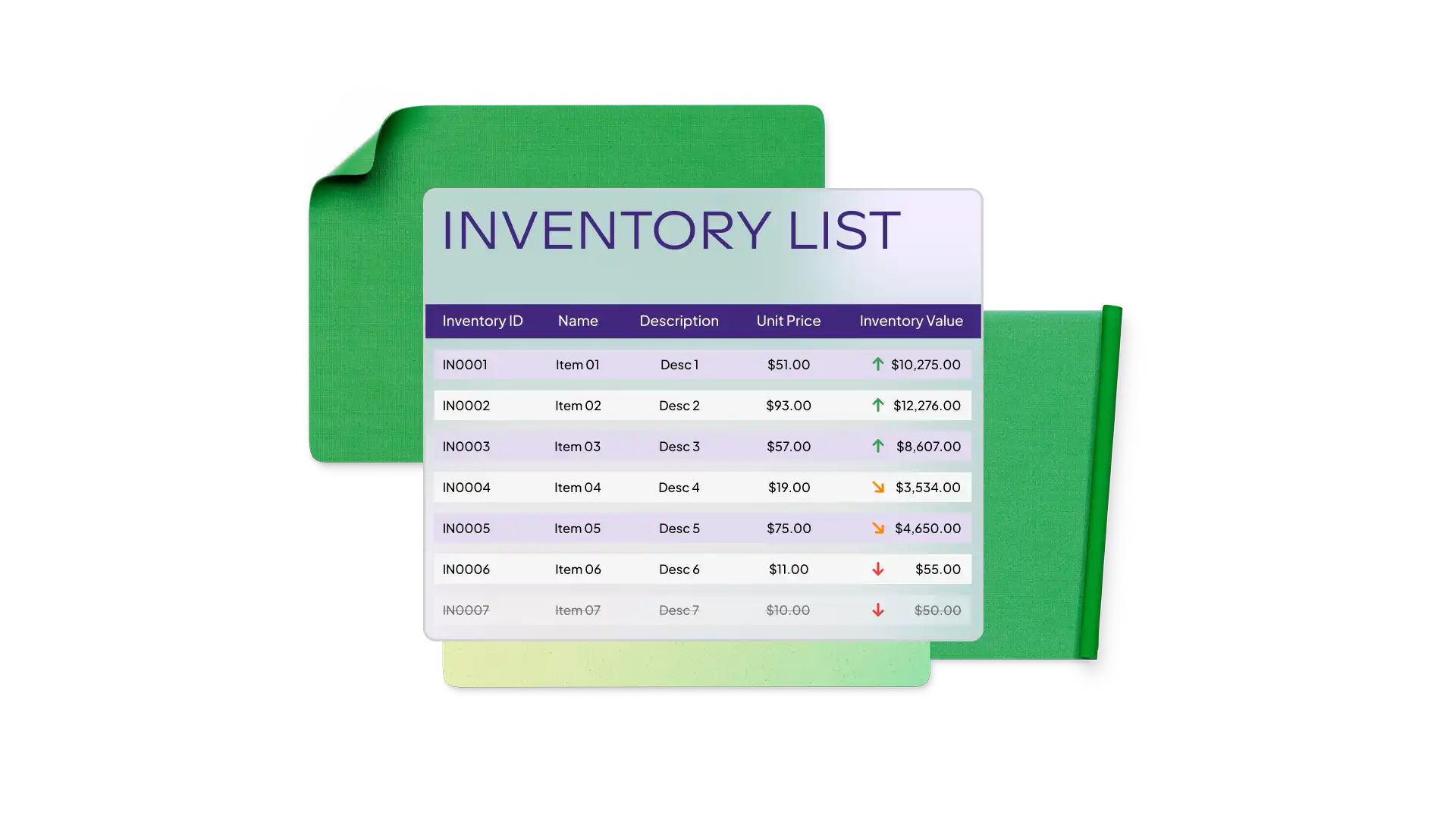
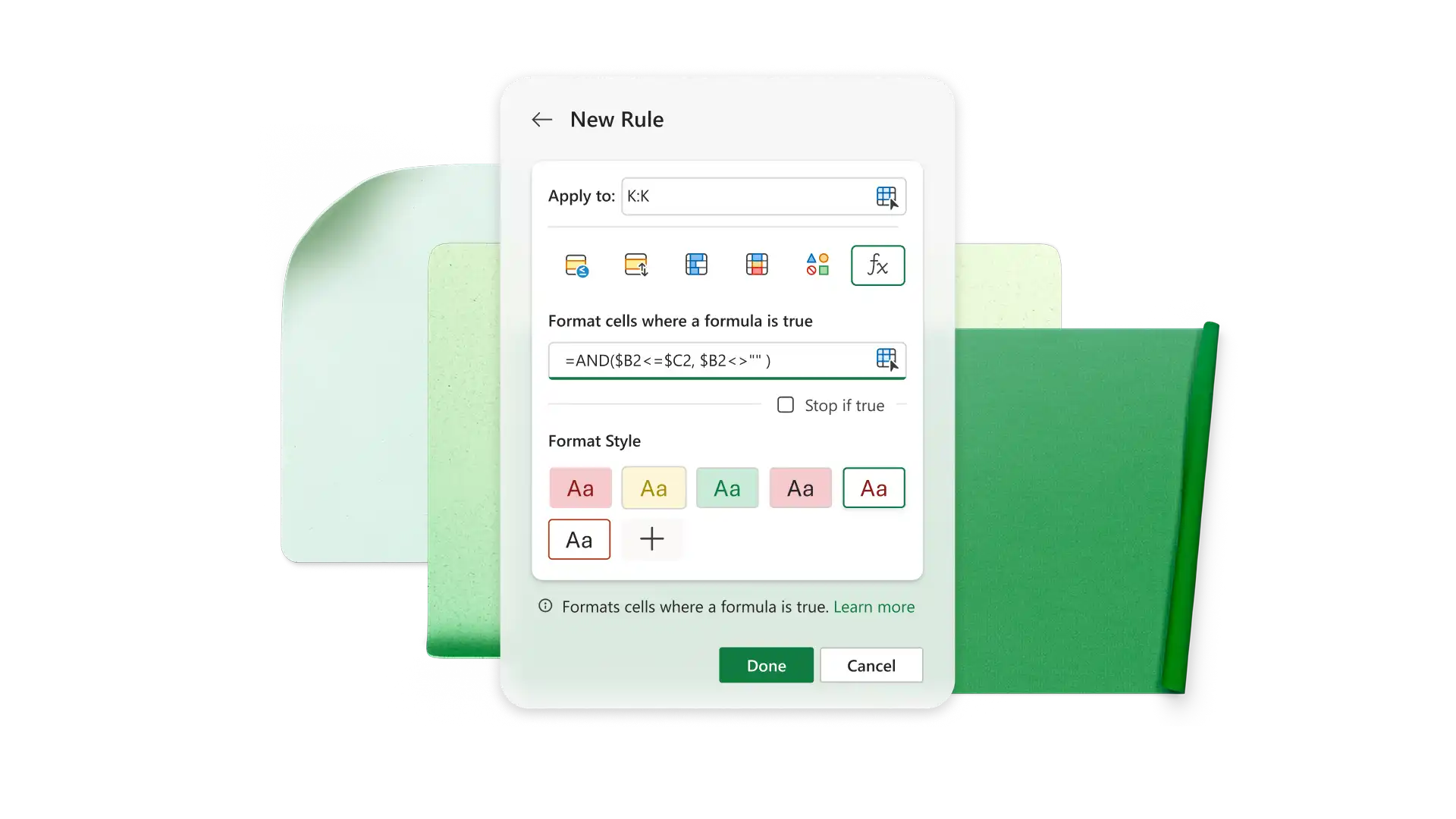
Reduce time generating inventory spreadsheets with free templates in Excel. Choose a warehouse inventory template to track stock levels or an equipment inventory template to monitor asset usage. Use templates that highlight reorder status with conditional formatting and tailored calculation formulas.
Easily customize Excel inventory templates to reflect your business operations setup and size. Track SKUs, barcodes, item names, suppliers, unit cost, reorder level, and more. Monitor across categories like raw materials and finished goods or tools and parts.

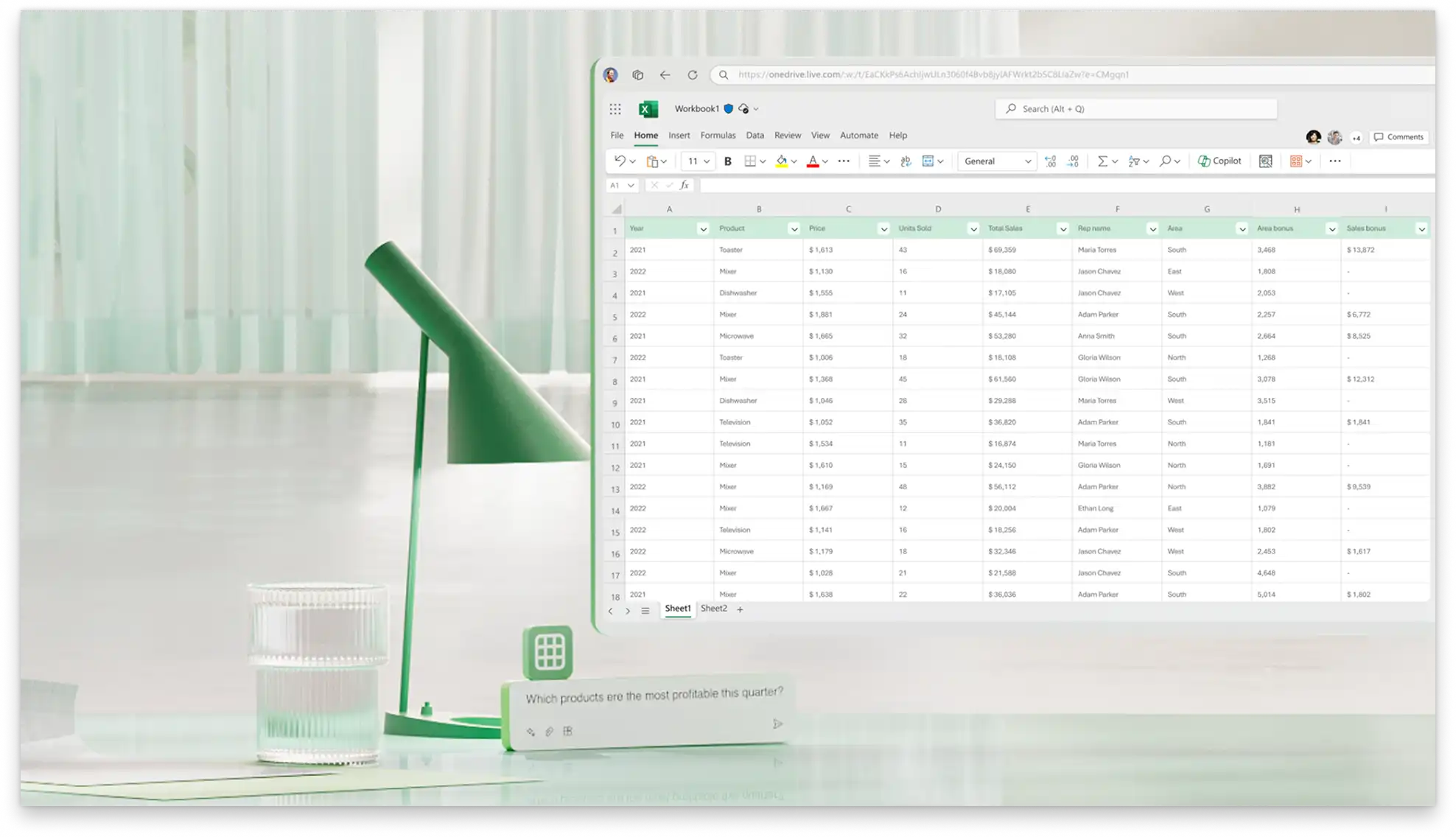
Create a linked transaction log to record every stock change and keep the inventory up to date. Record things like the date, quantity, type, and amount, then use formulas and linked cells to update the master inventory list.
Użyj wbudowanych formuł, aby oznaczać uzupełnienia zapasów i dokładnie obliczać sumy warunkowe. Ustaw progi ponownego zamówienia i wyróżnij elementy do uzupełnienia za pomocą formuły JEŻELI w programie Excel. Oblicz łączną liczbę lub koszty dla określonych elementów za pomocą funkcji SUMA.JEŻELI.
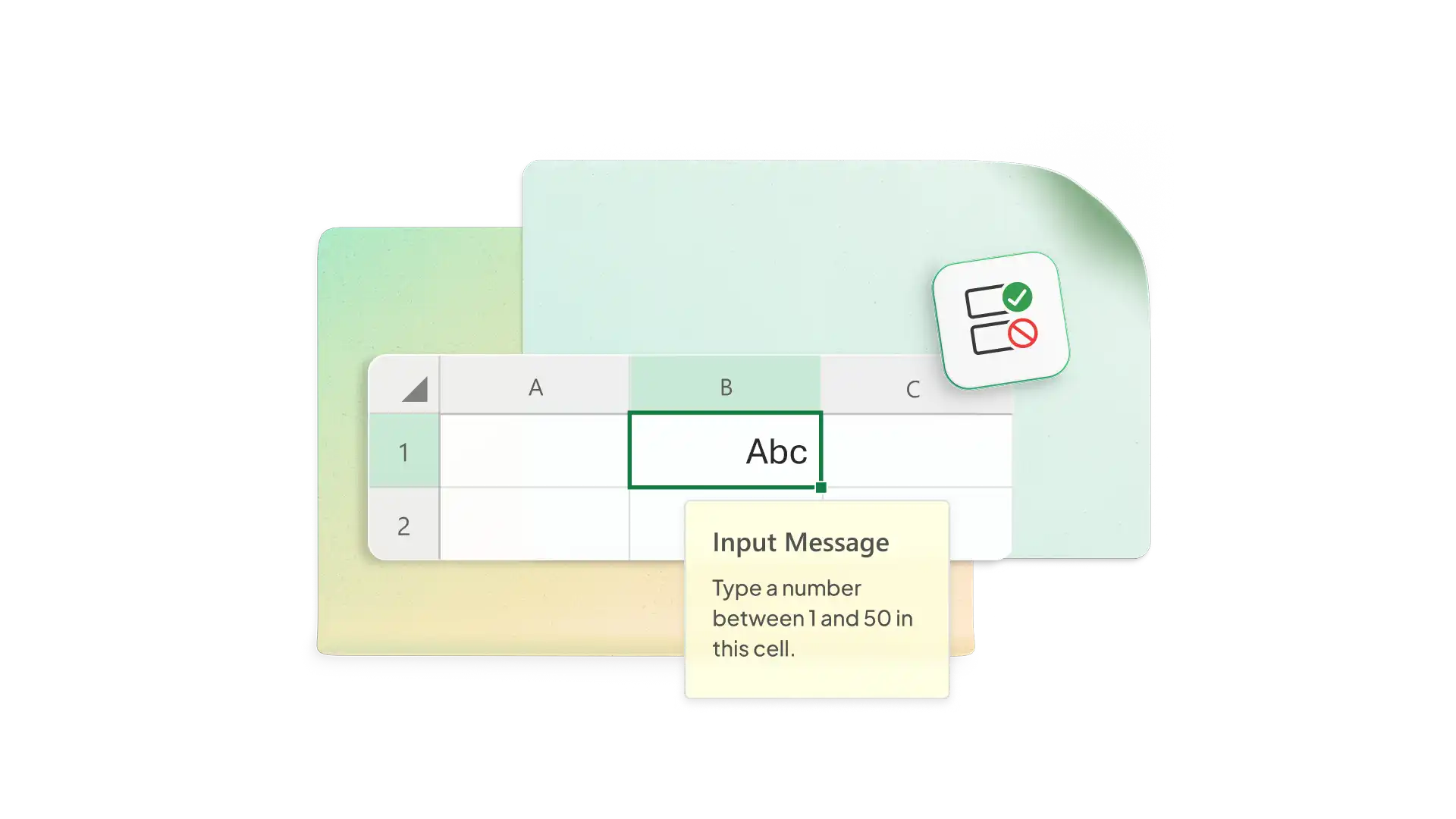
Restrict cell entries to specific values to reduce errors. Set transaction columns to accept values, or format your product column to only accept valid SKUs. Have Excel set up alerts if entries are invalid for the column transaction type.
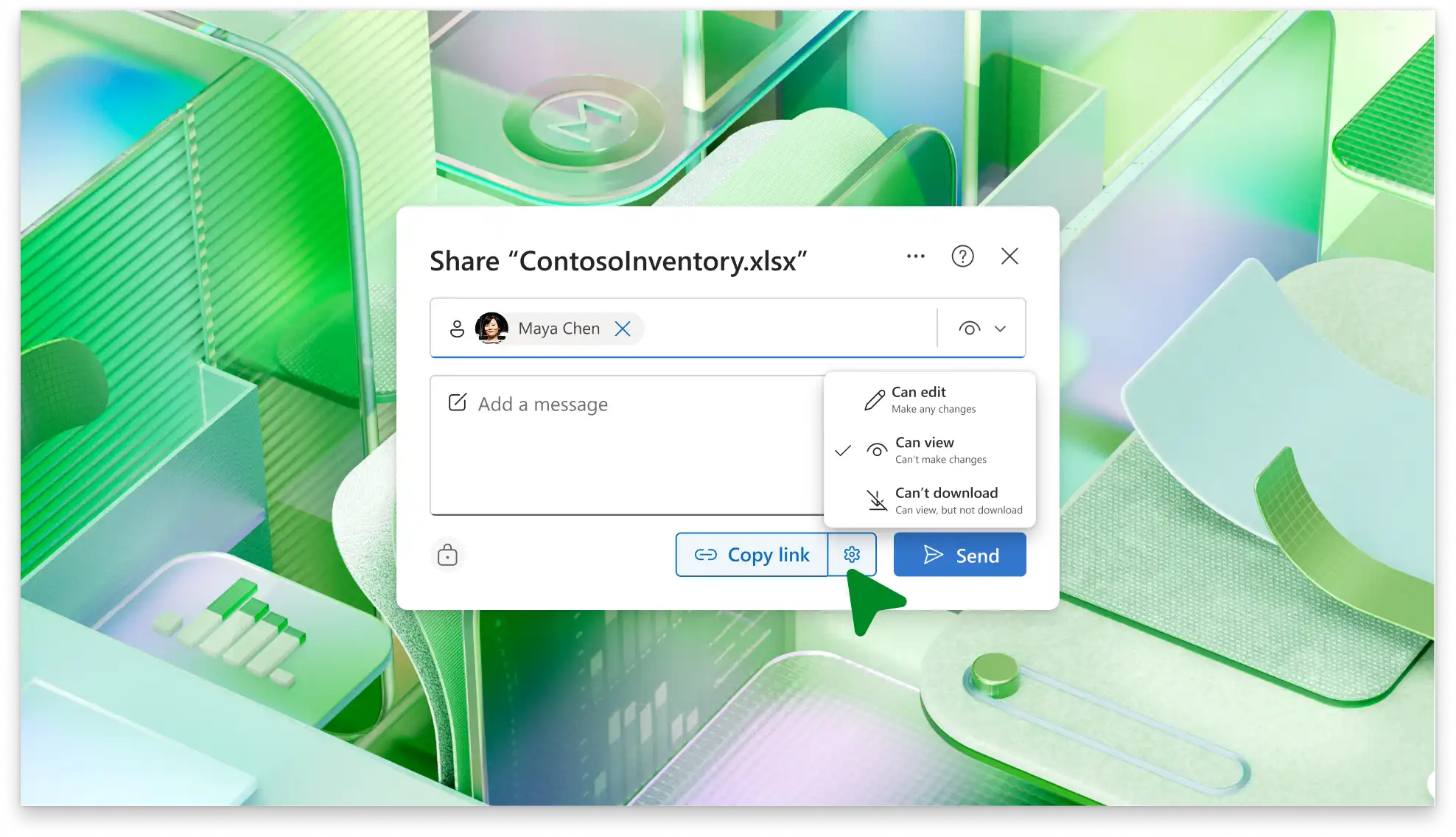
Share your inventory tracker spreadsheet with team members and co-author in real-time online. Protect the sheet and restrict access to specific ranges or cells. Give view-only access to lenders, investors, or donors to back up your growth projections.

Pozwól, aby funkcja Copilot w programie Excel proponowała i wdrażała rozwiązania oparte na sztucznej inteligencji w celu usprawnienia przepływów pracy. Użyj funkcji Copilot, aby przekonwertować plik PDF lub utworzyć nowy arkusz zapasów na podstawie nieprzetworzonych danych. Wygeneruj polecenie, aby przeanalizować wykorzystanie z ostatnich tygodni lub miesięcy i oszacować, na jak długo wystarczą obecne zapasy.
Get real-time stock visibility for accurate inventory.
Reduce manual errors with built-in formulas.
Automate low stock alerts to reorder products in time.
Analyze inventory trends to forecast demand.
Avoid wasting resources by holding too much inventory.
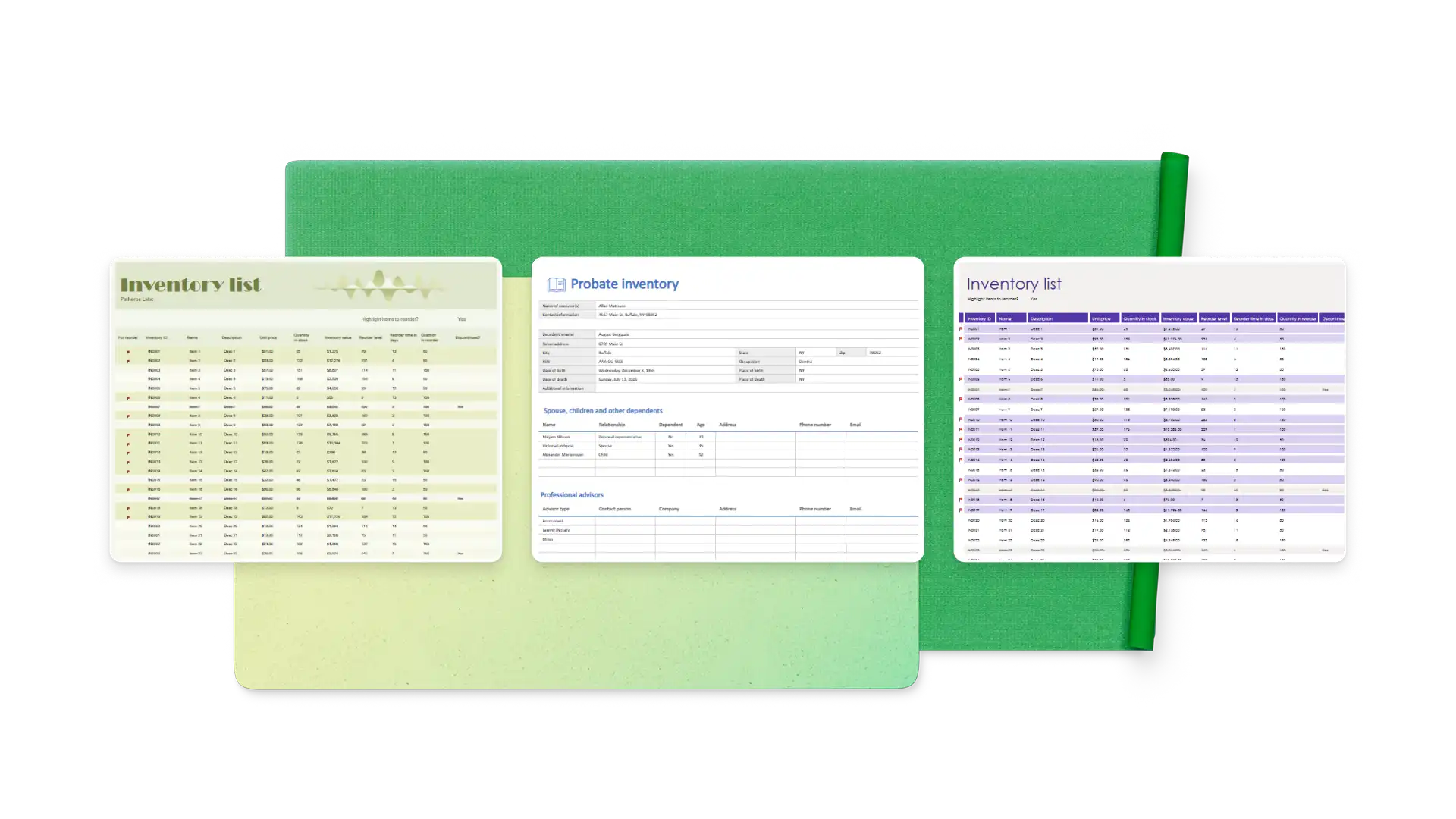
Choose an inventory tracker template and add item IDs, descriptions, categories, and costs
Use data validation to control input types
Flag low or no stock items with conditional validation
Set up a transaction log to record every movement and link the sheet to your inventory
Organize your inventory by supplier or store/warehouse location
Inventory management is important to keeping your customers happy by preventing stockouts. It also supports your business’ growth by helping you reduce excess inventory and forecast your needs more accurately.
Start by totaling the relevant expenses from your business budget, like warehouse rent, utilities, insurance, and shrinkage. Then, divide the total expenses by the total inventory value to get a percentage. For example, if you had an inventory value of $100,000 and carrying costs of $15,000, your carrying cost would be 15%.
Excel offers plenty of features and flexibility for businesses of different sizes to track inventory. You can track stock, orders, and sales in linked spreadsheets that update based on transaction data.
Use an Excel inventory template or create your own with item name, SKU, quantity, cost, reorder level, and location (where applicable). Either update it manually based on sales and purchasing reports or set up a linked transaction log to update product totals automatically.